

Carroll Students Take Research Interest to Next Level Through MCW Cancer Research Partnership
Author: Tim MumaPublished Date: 11/18/2026Categories:University News Academics Biology Grants and Research
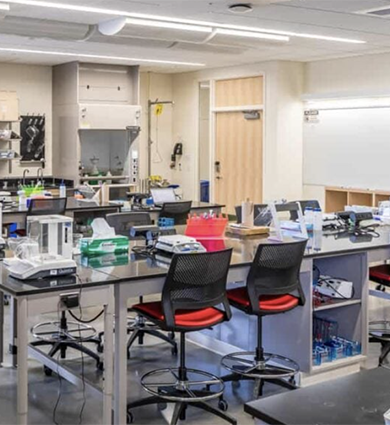
Nine students are gaining hands-on experience, professional mentorship and opportunities to contribute to cancer research through a new collaboration with the Medical College of Wisconsin.
For nine Carroll University students, an interest in science and health care is moving beyond the classroom and into the research laboratory. Through a new partnership with the Medical College of Wisconsin (MCW), the students are gaining hands-on experience in cancer research, working alongside established researchers at MCW's Cancer Center while developing skills and relationships that could help shape their future careers.
Carroll is the second institution to participate in MCW's Undergraduate Research Experience Program (UREP), which began approximately five years ago through a partnership with UW-Milwaukee. MCW selected Carroll in recognition of its strong health sciences program and emphasis on health care education, along with the academic preparation of its students.
"This is an exciting opportunity for our students to become involved in meaningful research and develop relationships with researchers who are working to advance our understanding of cancer," said Ben Hall, Ph.D., Carroll assistant professor of cellular and molecular biology and university liaison for the partnership. "They're learning firsthand what it takes to conduct research, from developing a proposal to working alongside experienced researchers in a laboratory."
For students, the opportunity offers a chance to explore questions that extend well beyond their coursework.
Adeline Carrell, a junior biochemistry major, was drawn to UREP because of the opportunity to gain access to research experiences that can be difficult for undergraduate students to find.
"So far I have learned how to professionally approach potential mentors, which is a skill I will need later on in grad school," Carrell said. "I have also learned how to read and understand research papers so I can apply the information to my own research project."
Favour Chinweoke, a junior biology major, developed an interest in research after taking genetics during her sophomore year. Fascinated by how small changes in DNA can have significant effects on human health, she saw UREP as an opportunity to combine her interest in medicine with meaningful, hands-on work.
Through the program and her current laboratory experience, Chinweoke is beginning to understand the complexities of cancer research, including how different tumor cells can respond differently to the same treatment.
"It is exciting to see how the things I learn in class connect to real research," Chinweoke said.
For Korina Haveman, a junior biology major with minors in psychology and biochemistry, the opportunity carries an especially personal connection. Her passion for cancer research stems from the disease's impact on her life and the lives of others.
"I was immediately drawn to the UREP program as an opportunity to contribute to the ongoing fight against cancer while learning research skills from an experienced investigator," Haveman said.
Haveman has already gained experience working with her mentor to develop a research proposal, including identifying relevant research questions and creating evidence-informed hypotheses.
The students are preparing for more extensive research involvement through a one-credit course this fall taught by Dr. Tamara Miller. As part of the course, they are developing proposals connected to their cancer research projects. MCW faculty will evaluate the proposals as part of a competitive selection process for full-time summer research positions. Each student is paired with an MCW research mentor who provides guidance throughout the experience. Students are expected to dedicate approximately 10 hours per week to research during the spring semester. Those selected for summer positions will work full time in their assigned laboratories from early June through mid-August.
Beyond developing laboratory skills, the experience provides opportunities for professional mentorship and career exploration. Students will work closely with researchers, gain insight into the field and build relationships that could benefit them as they consider graduate school, medical school, scientific research and other health care careers. At the conclusion of the experience, students will create research posters highlighting their work and present their findings to MCW faculty and researchers. They will also share their projects with the Carroll community the following fall.
While the inaugural cohort consists primarily of biology students, the partnership also creates opportunities for students interested in public health and other health-related disciplines. Carroll and MCW hope to make the collaboration an annual opportunity, with future applications and selection taking place each spring.
For these nine students, the partnership represents an opportunity to turn curiosity into discovery, gain experience alongside professionals in the field and take an important step toward making a difference through science.
